You Booked the Nice Room and You're Not Sorry: Letting Go of the Authenticity Police
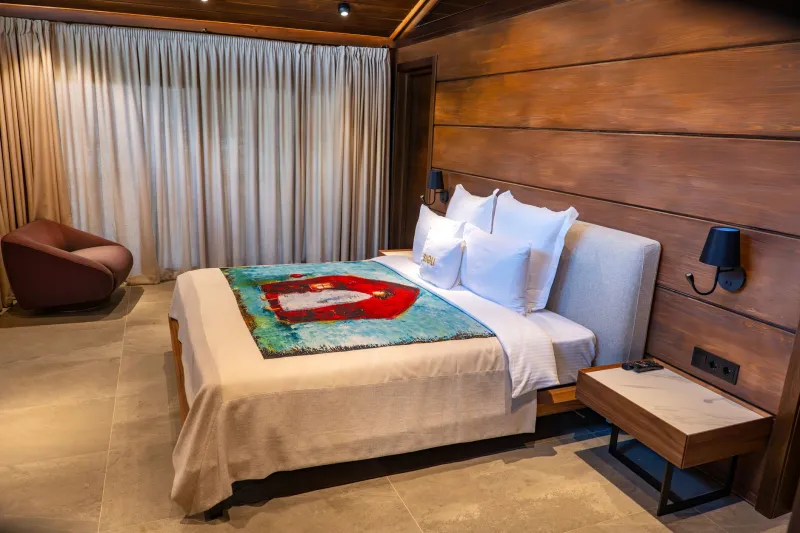
You did it. You splurged.
Maybe it was a night in a boutique hotel after four days of hostel bunk beds. Maybe it was a room with an actual bathtub in a city where you'd been surviving on street food and blisters. Maybe the pillow-top mattress practically glowed when you walked in, and for a second — just a second — you felt something weird. Not relief. Not excitement.
Guilt.
If you've ever stood in a genuinely comfortable hotel room and felt like you were somehow cheating on your own trip, you're not alone. That feeling has a name, even if nobody talks about it directly. Call it traveler's guilt. Call it the authenticity trap. Whatever you call it, it's real, it's surprisingly common, and it's almost entirely made up.
Where the Pressure to Suffer Actually Comes From
Travel culture in the US — and honestly, across most of the English-speaking world — has a complicated relationship with comfort. Somewhere along the way, we decided that the harder a trip was, the more it counted. The grittier the hostel, the more cramped the overnight bus, the longer the line at the border crossing: these became badges of honor. The discomfort was proof that you weren't just vacationing. You were experiencing.
Social media made it worse. Nobody posts a photo of themselves tucked into 400-thread-count sheets with a caption about how good it feels to rest. They post the dusty backpack leaning against a crumbling wall, the cheap noodle bowl at a plastic table, the hammock strung between two trees. Those images carry weight. They signal something — toughness, openness, freedom from materialism — that a well-appointed hotel room quietly undermines.
And so the story got written: real travelers rough it. Everyone else is just a tourist.
It's a compelling story. It's also nonsense.
Rest Is Not the Opposite of Adventure
Here's the thing nobody tells you when you're planning a big independent trip: exhaustion is not insight. Sleep deprivation does not make you more present. Ignoring your body's need for rest doesn't deepen the experience — it narrows it.
When you're running on four hours of sleep in a dorm room where someone's alarm went off at 5 a.m. for no apparent reason, you are not absorbing the culture around you. You're surviving it. You're scanning for coffee, counting down to bedtime, and moving through the world with a thin film of irritability over everything. That's not authentic travel. That's just being tired in an interesting location.
A good night's sleep — in a room with blackout curtains and a working shower with water pressure — can reset your entire relationship with a destination. You wake up actually curious. You walk slower. You notice things. You talk to people without that low-grade crankiness humming underneath every interaction.
Comfort, used well, is a tool. It's not a betrayal.
The Myth of the Suffering Traveler
Let's be honest about where the romance of roughing it comes from. A lot of it is class performance dressed up as virtue. Choosing discomfort when you have the means to choose otherwise is a very specific kind of privilege — the privilege of making suffering optional. And there's something a little off about treating that choice like it makes you a better, more serious traveler than someone who books a room with a bathtub.
The travelers who have to take the overnight bus, who have to sleep in the cheapest place available, who don't have the luxury of splurging on a recovery night — they're not doing something more authentic than you. They're just working with different constraints. Pretending that your chosen discomfort mirrors their circumstance is its own kind of dishonesty.
Authenticity in travel has nothing to do with thread count. It has everything to do with how present you are, how open you are, how willing you are to be changed by what you encounter. You can be all of those things in a room with a minibar.
When Splurging Actually Serves the Trip
There are moments in a long trip when a comfortable room isn't a luxury — it's a strategy. After a brutal travel day. After an emotionally heavy experience that needs processing time. After you've pushed yourself hard for a week straight and can feel your enthusiasm starting to curdle into resentment.
Those are exactly the moments when a good room pays dividends. You don't just sleep well. You recover your capacity to be interested, to be moved, to be the kind of traveler you actually want to be. You come back to the trip instead of just enduring the rest of it.
Some of the most meaningful travel experiences happen after a night of real rest. You're sharper, softer, more available to whatever the day wants to show you. That nice hotel room didn't cheapen the adventure. It made room for more of it.
Giving Yourself Permission
If you're the kind of traveler who needs explicit permission, here it is: you can book the comfortable room. You can order room service. You can spend a whole afternoon doing absolutely nothing in a hotel with a pool. You can choose rest over hustle, comfort over grit, and none of that makes you less of a traveler.
Wander With Kami exists because travel changes people — not because it punishes them. The trips that stick with you, the ones that actually shift something inside you, are rarely the ones where you white-knuckled it through every uncomfortable moment for the sake of a story. They're the ones where you showed up fully, rested enough to be present, open enough to be surprised.
You can't be changed by a place you're too exhausted to actually see.
So go ahead. Pull back those curtains. Stretch out on that ridiculous mattress. Order the thing from the menu that costs a little more than you'd usually spend.
The trip will still be real. You'll just be awake enough to remember it.