The Wrong Road Was the Right One All Along: How Detours Become the Trips You Actually Tell People About
Here's a question worth sitting with: When you tell someone about a trip you took, what do you actually talk about?
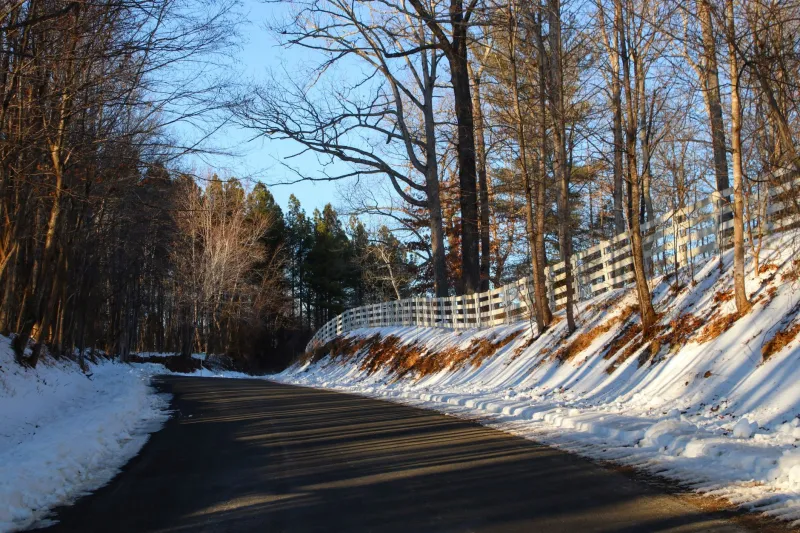
Not the things you planned. Not the museum you booked tickets for three weeks in advance, or the restaurant that had a four-and-a-half star rating and a ninety-minute wait. You talk about the afternoon everything went sideways. The detour. The closed road. The sign for a town you'd never heard of that you followed on a whim because, well, why not?
We spend so much energy trying to optimize travel — building itineraries like engineering projects, cross-referencing review sites, mapping routes down to the mile — and then the moments that stick are almost always the ones we never saw coming.
There's something worth unpacking there.
The Illusion of the Perfect Route
Modern travel culture has a complicated relationship with control. We want the adventure, but we want it scheduled. We want to feel spontaneous, but we want a backup plan. The travel industry has gotten very good at selling us the feeling of discovery while quietly making sure nothing too unexpected actually happens.
And look — there's nothing wrong with having a plan. Knowing which ferry you need to catch, having a reservation somewhere to sleep, understanding roughly how long it takes to drive from point A to point B. That's not over-planning. That's just being a functional adult.
But there's a difference between a framework and a script. A framework gives you a starting point. A script leaves no room for Dolores and her peach cobbler.
When we treat an itinerary like a document that must be executed perfectly, we stop traveling and start performing travel. We move through places like we're checking items off a list rather than actually being somewhere. And the cost of that is real — it's the stuff that only happens when you slow down, take the wrong exit, and let a place surprise you.
What the Detour Actually Does
There's a reason the unplanned moments feel different. Psychologically, novelty and mild uncertainty activate parts of the brain associated with attention and memory formation. When something unexpected happens — a road closure forces you down a county highway you've never driven, a stranger at a gas station tells you there's a waterfall about four miles back that most people miss — your brain wakes up. You're not on autopilot anymore.
You're present.
And presence is the whole thing. It's what every meditation app, every mindfulness retreat, every wellness influencer is trying to sell you. But travel has always offered it for free, if you're willing to let go of the plan long enough to actually receive it.
The detour forces presence because it's unfamiliar. You can't zone out and follow the GPS when the GPS has given up. You have to look around. You have to pay attention. You have to make small decisions — turn here, stop there, ask that person — and those decisions, one after another, build into something that feels genuinely yours.
The Geography of the Unplanned
Some of the most interesting places in America exist specifically because they're not on the main road.
Think about how many towns in this country — good, strange, beautiful, complicated towns — sit just off the interstate, invisible to anyone who isn't willing to take the exit. The roadside diners that have been serving the same breakfast since 1967. The state parks that don't make anyone's top-ten list but are absolutely stunning on a Tuesday morning when you're the only person there. The local festival you stumbled into that turned out to be the weirdest and most wonderful thing you'd seen all year.
Guidebooks can't catalog all of it. Review sites can't surface what they don't know about. The algorithm can't recommend what nobody has thought to post yet.
Some of the best places are best precisely because they haven't been optimized for visitors. They're just places where people live, and you happened to end up there, and for a few hours you got to be part of something that wasn't designed for you.
That's a gift. The detour delivered it.
How to Actually Let This Happen
Embracing the detour isn't about being reckless or performing spontaneity for the sake of a good story later. It's more of a posture — a willingness to hold your plans loosely enough that when something unexpected appears, you can actually see it.
A few things that help:
Build slack into your schedule. The traveler with a packed itinerary can't take the detour because they can't afford to. If every hour is accounted for, every unexpected moment becomes a problem instead of an opportunity. Leave gaps. Leave afternoons unscheduled. Leave room for things to happen.
Follow the low-stakes recommendation. When someone local — a gas station attendant, a woman at the next table, the guy renting you the kayak — casually mentions something worth seeing, take it seriously. These aren't curated suggestions. They're just things people think are worth knowing about. Those are often the most reliable tips you'll ever get.
Resist the urge to immediately document. When something unexpected and good happens, the instinct is to reach for your phone. Sometimes that's fine. But sometimes the act of trying to capture it pulls you out of it. Let some detours just be yours for a while.
Get comfortable with mild disorientation. Not lost-in-a-dangerous-situation disorientation, but the gentle uncertainty of not knowing exactly where you are or what comes next. That feeling is often the leading edge of something interesting.
The Story You'll Actually Tell
Years from now, when you're talking about the trip — at a dinner party, on a phone call with a friend, in your own head at 2 a.m. when you can't sleep and your mind goes somewhere good — you won't be talking about the things that went according to plan.
You'll talk about the afternoon the highway was closed and you ended up in that small town and found the diner and met the people and something shifted, quietly, in the way you understood what travel was actually for.
The detour won't feel like a detour anymore. It'll feel like the whole trip.
Maybe that's because it was.