What the Stuff You Threw Away Knew About You That the Stuff You Kept Never Did

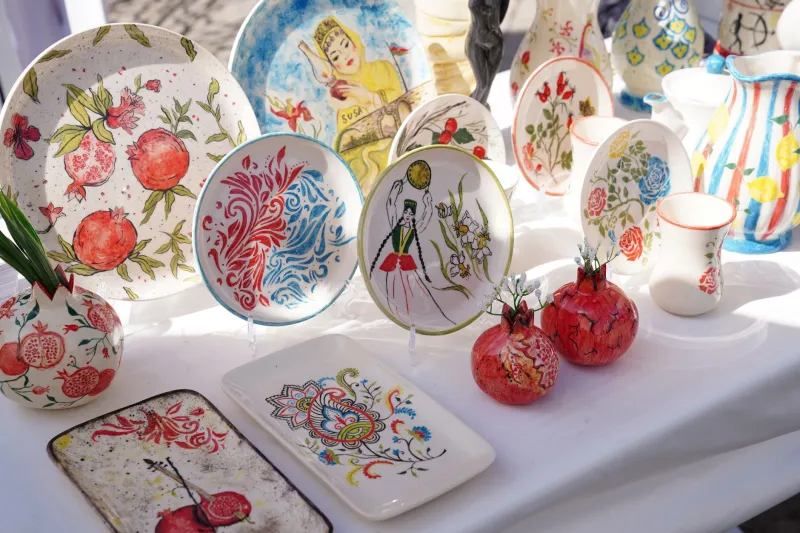
Somewhere in the back of a closet, or at the bottom of a donation bin at a Goodwill off the highway, there's a ceramic bowl I bought in Santa Fe on a trip I took four years ago. I was convinced, standing in that little gallery off the plaza, that it was the object that would anchor the entire experience. It was hand-painted. It cost more than I should have spent. I wrapped it in three layers of clothing for the flight home.
I kept it for two years. Then one Saturday, during a move, I held it in my hands for a long moment — really looked at it — and put it in the donate pile without much ceremony at all.
That was the moment I started thinking about what we actually learn from the things we let go.
The Mythology of the Kept Thing
There's a whole industry built around the idea that travel should leave a physical mark. Magnets, pressed pennies, shot glasses, framed prints. We buy things because we want proof — proof that we were somewhere, proof that it changed us, proof that the money and the time and the emotional energy were worth it.
The objects we keep become stand-ins for the experience itself. We point to them at dinner parties. We arrange them on shelves. We photograph them for Instagram with captions about wanderlust.
But here's the thing nobody talks about: a lot of those objects eventually end up in a box. Or a drawer. Or, yes, a donation bin off the highway. And the quiet, slightly uncomfortable truth is that the act of letting them go — and the reasons we do — often tells us far more about who we've become than the act of acquiring them ever did.
The Discard Pile as a Mirror
Think about the last time you went through old travel stuff. Not with nostalgia, but with the clear eyes of someone who just needs to make space. You pick up a shot glass from Savannah and feel... nothing. Into the box it goes. You find a stack of printed photos from a road trip through the Southwest and realize you can't remember half the people in them. You delete a hundred near-identical photos of a cathedral from your camera roll and feel, honestly, relieved.
What's happening in those moments isn't loss. It's clarification.
The things that don't survive that kind of audit were never really yours. They were aspirational. You bought the bowl in Santa Fe because you wanted to be the kind of person who has a Santa Fe bowl on their shelf — someone cultured, someone who collects meaningful objects, someone whose home tells a story. But if you have to perform the story every time a guest asks about it, it was never really your story to begin with.
The stuff you throw away is the stuff that belonged to the version of yourself you were trying to be on that trip, rather than the version you actually were.
What Gets Kept Without Trying
Here's what I've noticed: the things that survive — the things I never once considered donating or deleting — were almost never the things I bought with intention.
There's a worn matchbook from a bar in New Orleans I've never once thought about getting rid of. I didn't buy it. I picked it up off the bar almost by accident while I was deep in conversation with a stranger who turned out to be one of the most interesting people I've ever met for forty-five minutes. The matchbook is a crummy little cardboard thing. It means everything.
There's a photo on my phone — blurry, badly lit — of a rest stop somewhere in rural Tennessee at two in the morning, vending machine glow and empty parking lot and nothing else. I scroll past it sometimes and feel something I can't quite name. It's not a beautiful photo. It captures nothing that would make sense to anyone else. I will never delete it.
The things that stick aren't chosen. They choose you. And understanding the difference is, I'd argue, one of the more quietly important lessons travel has to offer.
The Experiences We Choose to Forget
This isn't just about objects. We do the same thing with memories.
We curate our travel stories ruthlessly. We tell the funny version of getting lost, not the version where we sat on a curb and genuinely cried. We share the sunset photo, not the two hours of sunburn and bug bites that preceded it. We remember the good meal and quietly bury the three mediocre ones.
And sometimes, we choose to let go of entire experiences — not because they were bad, but because holding onto them no longer serves us. The trip we took with someone we're no longer close to. The destination that felt transformative at the time but now just feels like a place we went once.
That kind of forgetting isn't failure. It's editing. And every good editor will tell you that what you cut is just as important as what you keep.
What Your Discarding Habits Actually Reveal
If you want to understand how you've grown as a traveler — as a person — don't look at what's on your shelf. Look at what you got rid of.
Did you used to collect a souvenir from every single destination and now you leave almost empty-handed? That's not indifference. That's confidence. You've stopped needing the object to prove the experience was real.
Did you used to delete every unflattering photo and now you keep the messy ones? That's not carelessness. That's honesty. You've stopped needing your travel to look a certain way.
Did you used to journal obsessively and now you barely write a word? Maybe you've stopped needing to process everything out loud. Maybe you've learned to just let a trip live inside you without pinning it down.
Or maybe the reverse is true for you. Maybe you used to travel light and now you've started keeping more — a bus ticket here, a torn map there — because you've finally started paying attention to the small things. That's growth too.
The Real Souvenir
Wander long enough and you start to realize that the point was never the bowl. It was never the magnet or the shot glass or the five hundred nearly identical photos of the same famous bridge.
The real souvenir is subtler than any of that. It's the way a certain quality of afternoon light now reminds you of a place you loved. It's the restaurant you opened because a stranger in another country described their grandmother's recipe with such obvious joy that you had to try to recreate it. It's the part of you that got a little quieter, or a little louder, or a little more willing to sit with uncertainty — and stayed that way.
You can't put that on a shelf. You can't donate it when you're clearing out a closet. It doesn't end up in a box.
The stuff you threw away taught you that. And that, honestly, might be the most valuable thing any trip has ever given you.