What You Left on the Shelf Says More About You Than What's in Your Suitcase
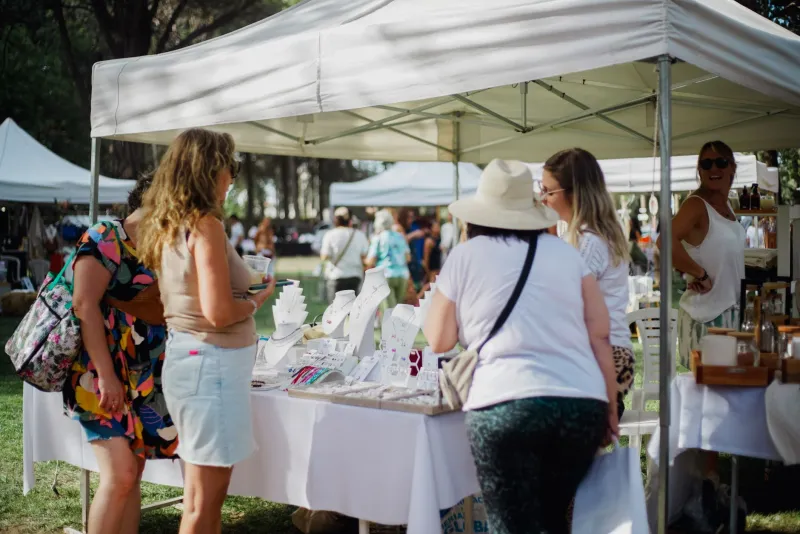
It was a hand-painted ceramic bowl in a little market stall in Santa Fe. Turquoise and terracotta, the kind of thing that looks like it was made specifically for the version of you that has a tastefully decorated kitchen and throws dinner parties on Sunday evenings. I held it for a good three minutes. I turned it over, checked the price, set it down, picked it back up.
And then I put it back and walked away.
I still think about that bowl. Not with regret, exactly — more like the way you think about a road you didn't take, wondering what the view would have looked like from the other side.
But here's what I've started to understand: the things I choose not to buy on a trip are doing something the things I do buy almost never manage. They're holding up a mirror.
The Purchase You Talk Yourself Out Of Is the One That Tells the Truth
Most of us have a mental script we run in souvenir shops. Is this practical? Will I actually use it? Do I have room in my bag? Is this just impulse? We've all got our version of it, and we've all, at some point, used it to talk ourselves out of something we genuinely wanted.
But there's a different kind of putting-it-back that happens when you've changed — and you don't always notice it in the moment.
Maybe you used to be the person who bought every novelty magnet for the fridge. Then one trip, you're standing in front of a whole wall of them and you feel... nothing. Not restraint. Just indifference. That's not discipline. That's drift. You've moved somewhere new inside yourself, and the fridge magnets didn't follow you there.
Or maybe it's the opposite. You used to scoop up the expensive, beautiful things — the hand-blown glass, the artisan leather goods — and now you're traveling lighter, literally and figuratively, and the idea of owning more stuff feels like weight you didn't sign up to carry. That shift tells you something, too.
Restraint Isn't the Same as Deprivation
There's a version of not-buying that comes from a tight budget, and that version is real and worth naming honestly. When you can't afford something, walking away stings differently. That's not self-discovery; that's just math.
But even within that constraint, something interesting happens. You start to notice what you wish you could bring home. And wishes, it turns out, are a pretty accurate map of your values.
If you're lingering over the hand-bound journal but walking past the novelty shot glasses without a second glance, that contrast means something. If you're drawn to the locally made pottery but not the branded tourist gear, that's a preference that goes deeper than aesthetics. It's identity. It's the version of yourself you're quietly building, even when you're just browsing.
Minimalism gets a lot of credit for being a lifestyle choice, but sometimes it's less a philosophy and more a symptom — a sign that your priorities have quietly reshuffled themselves while you weren't paying attention. Travel has a way of accelerating that process. You spend two weeks living out of a backpack and suddenly the idea of adding anything to your life feels like a burden rather than a joy.
The Thing You Remember More Vividly Than What You Brought Home
Here's the part that genuinely surprises people when they think about it: the souvenirs that didn't make it home tend to be more memorable than the ones that did.
The little wooden figure you left in that shop in New Orleans. The vintage postcard you almost bought at the flea market in Portland. The silk scarf you put down because you couldn't justify the price. These things live in the memory with a strange vividness — frozen in the moment of almost, preserved by the decision to leave them behind.
Meanwhile, the stuff that did come home with you? Half of it is in a drawer somewhere. Some of it you can't even remember buying.
There's a psychological principle at work here — the idea that incomplete experiences tend to stick with us longer than completed ones. But I think it's more than that. The things we walk away from represent a choice, and choices feel significant in a way that automatic purchases don't. Every time you pick something up and put it back down, you're making a small declaration about who you are.
What the Empty Hands Are Actually Carrying
I've talked to a lot of travelers over the years — the kind who move through the world slowly, who take the local bus instead of the tour van, who eat where the menus aren't in English — and one thing I've noticed is that the ones who travel the most tend to buy the least.
It's not frugality, necessarily. It's more like they've figured out that the best stuff from a trip isn't available for purchase. The conversation with the stranger at the bar. The afternoon when the rain came in and you had nowhere to be. The moment the light hit the water in a way that made you stop walking and just stand there.
None of that fits in a tote bag. None of it has a price tag.
When you start leaving the shop empty-handed more often, you're not losing something. You're making room. Room in your luggage, sure, but also room in your attention — space to notice what's actually happening around you instead of cataloging what's available for sale.
The Self That's Becoming
Here's the real thing about the souvenir you didn't buy: it's not about the object at all. It never was.
What you choose to carry forward from any experience — physical or otherwise — is a reflection of who you're becoming. And travel, more than almost anything else in life, has a way of accelerating that becoming. You move through unfamiliar places, you shed old habits and assumptions, you try on different versions of yourself in cities where nobody knows your name.
Sometimes, you come home lighter than you left. Not just in your bag, but in the way you think about what you need, what you want, what actually matters.
That ceramic bowl in Santa Fe? I think the version of me who wanted it was a little bit younger, a little more focused on having the right things in the right rooms. The version of me who put it back was maybe starting to care more about how I was spending my hours than how I was decorating my shelves.
I can't be sure. But I think about it, and that's kind of the point.
The shelf remembers what you left behind. And if you pay attention, so do you.