Stranded and Grateful: Why the Trip That Fell Apart Was the One Worth Taking
There's a version of the story you planned to tell. The one where everything went smoothly, the hotel was charming, the food was exactly as described in the reviews, and you came home with a tidy little narrative about how wonderful it all was.
And then there's the story you actually tell — at dinner parties, on long drives, in texts that start with "okay so you will not believe what happened."
The second kind almost always begins with something going wrong.
The Myth of the Perfect Itinerary
We spend so much energy trying to prevent the detour. We screenshot confirmation emails. We screenshot the screenshots. We build in buffer time and backup plans and check the weather obsessively the week before departure. And still — still — the flight gets canceled. The rental car blows a tire outside a town you've never heard of. You take the wrong exit and end up somewhere the GPS can't quite figure out.
Here's the thing nobody puts in the travel brochure: that moment of disruption? That's often where the real trip begins.
Psychologists who study memory and emotion have long noted that we don't remember the smooth parts of experiences as vividly as the unexpected ones. Our brains are wired to pay attention when the script gets thrown out. Novelty, uncertainty, mild stress — these are the conditions under which we become most alert, most present, most alive to what's around us. The perfectly executed vacation can blur into a pleasant haze. The one where everything went sideways tends to stay with you in sharp, specific detail.
When the Wrong Turn Became the Right One
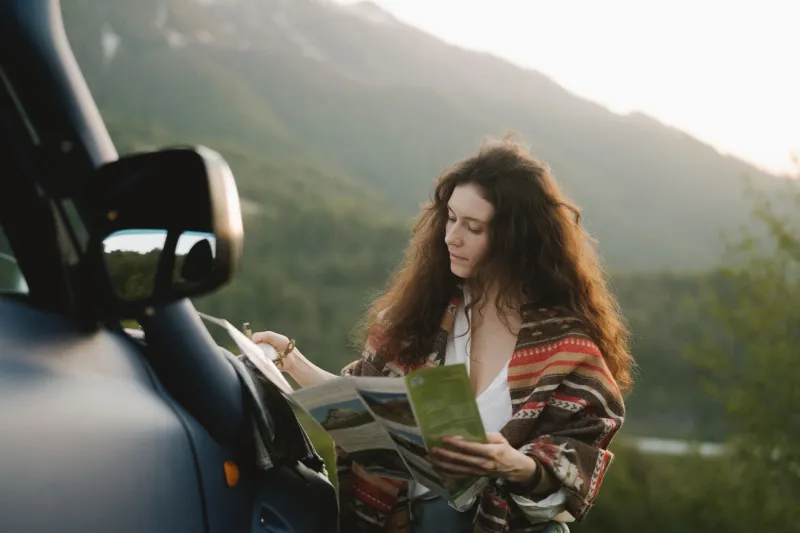
A reader from Nashville, Tennessee shared a story that stuck with us. She was driving solo through rural New Mexico, headed toward a well-known state park she'd been planning to visit for two years. Somewhere outside of Pie Town — yes, that's a real place — her car's check engine light came on hard enough that she pulled over at a gas station that looked like it hadn't been updated since 1987.
She ended up spending the night in a tiny motel run by a couple who had lived in that county their whole lives. They fed her green chile stew. They showed her photos of the landscape before the highway was built. The husband drove her out before sunrise to see a mesa she never would have found on her own.
"I never made it to the state park," she wrote. "And I've never once wished I had."
That's not a unique story. Ask around. Ask your well-traveled friends to tell you about a trip that changed them, and watch how many of them start with "so things didn't exactly go according to plan."
The Gift Hidden Inside the Disruption
Getting stranded — whether by a canceled connection at O'Hare, a ferry that stops running due to weather, or a road that turns to mud after a rainstorm — forces something on you that no amount of careful planning ever can: surrender.
You stop being the architect of the experience and start being a participant in it. You have to ask for help. You have to talk to strangers. You have to figure out where to sleep in a town you've never heard of, eat at a diner you never would have chosen, and find something interesting about a place you had zero intention of visiting.
And almost universally, people do find something interesting. Because interesting things are everywhere — they're just usually invisible when you're moving fast and on schedule.
There's also something quietly humbling about losing control of a trip. It's a reminder that you were never really in control to begin with. Travel has always been a negotiation between your intentions and the world's indifference to them. The disruption just makes that negotiation visible.
What You Learn About Yourself When the Plan Collapses
Here's the uncomfortable part: how you respond when things go wrong tells you something about yourself that smooth sailing never will.
Do you spiral? Do you get mean to airline employees who had nothing to do with the weather? Do you shut down and refuse to adapt? Or do you find some reserve of flexibility you didn't know you had — some capacity to shrug, look around, and ask okay, what's actually here?
A lot of travelers come home from disrupted trips surprised by themselves. Surprised that they handled it. Surprised that they found a way through. Surprised that the thing they were most afraid of — being stranded, being lost, being off-plan — turned out to be manageable, even interesting.
That's not nothing. That's actually a pretty significant thing to learn about yourself.
Choosing the Detour on Purpose
Some of the most experienced travelers we've talked to have started building deliberate uncertainty into their trips. Not chaos — just space. An unscheduled afternoon. A day with no reservations and no agenda. A rental car and a direction, but no specific destination.
It sounds uncomfortable, especially if you're someone who finds security in a well-organized plan. But what you're really doing is giving yourself permission to be surprised. You're leaving room for the trip to become something you didn't imagine.
Try it on a small scale first. Next time you're somewhere new, skip the top-reviewed restaurant and walk until something catches your eye. Take the scenic route even when you're not sure exactly where it goes. Say yes to the detour sign pointing toward a waterfall you've never heard of.
You might end up somewhere unremarkable. Or you might end up with a story you'll still be telling ten years from now.
The Trip That Rewrites You
The journeys that actually change us rarely look the way we pictured them. They're messier. They're more inconvenient. They involve more strangers and more uncertainty and more eating gas station snacks in a parking lot while you figure out your next move.
But they're also more real. More yours. More alive.
The detour doesn't have to be dramatic to matter. It just has to knock you off the path long enough for you to notice where you actually are.
And sometimes — more often than you'd expect — where you actually are turns out to be exactly where you needed to be.
Have a story about a trip that went sideways in the best possible way? We want to hear it. Share your detour story with the Wander With Kami community.