That Random Conversation on the Bus Changed My Whole Trip
I almost didn't say anything.
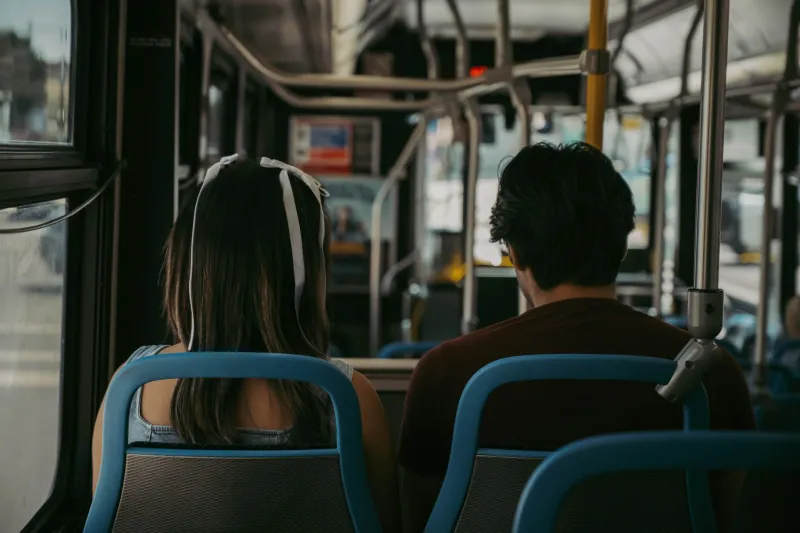
The bus from Asheville into the mountains was half empty, and the woman next to me had a beat-up paperback open on her lap. She wasn't reading it. She was staring out the window at the same rolling green nothing I was. I had headphones in but no music playing—the classic don't-talk-to-me prop—and still, something made me pull them out.
"Is it always this quiet up here?" I asked.
Thirty minutes later, I had a handwritten list of three places she said I absolutely could not miss, a recommendation for a diner that doesn't have a website, and a completely reframed sense of what I was doing on that trip in the first place. I also had a name I'd forget within a week and a conversation I haven't forgotten since.
That's the strange alchemy of talking to strangers when you're traveling. The stakes feel low because you'll probably never see them again. But somehow, that's exactly what makes it matter.
Why the First Thirty Seconds Are the Hardest
There's a specific kind of social discomfort that only exists in travel settings. You're in a hostel common room in a city where you don't know anyone. Or you're sitting alone at a bar in New Orleans trying to look like you meant to be there by yourself. Or you're waiting for a delayed flight in some mid-size regional airport and the person next to you has been making eye contact for ten minutes.
We've been conditioned—especially in the US, where personal space is practically a constitutional right—to treat strangers as a default threat to our comfort. We put in the earbuds. We open the phone. We build little fortresses out of our carry-ons.
And yet, almost every traveler you talk to will tell you that the moments they remember most weren't the landmarks or the restaurants or the carefully planned excursions. They were the conversations. The ones that started with something dumb like "where are you headed?" and somehow ended up somewhere real.
The awkwardness at the start is the price of admission. You pay it and move on.
Small Talk Isn't Small
Here's something worth reframing: small talk isn't the shallow version of connection. It's the doorway.
When you ask a local in Memphis where they actually go for barbecue—not where they send tourists, but where they go—you're not making small talk. You're signaling that you're curious about their life, not just their city. That shift in framing changes the whole conversation.
Same goes for fellow travelers. Asking someone in a hostel kitchen where they're from is technically small talk. But following it up with "what made you come here specifically?" or "what's surprised you most?" opens a door that most people are genuinely happy to walk through. People want to talk about their experiences. They just need someone to ask the right question.
The trick isn't being charming or outgoing. It's being genuinely curious. Curiosity is disarming in a way that charisma isn't.
What Locals Know That Your Guidebook Doesn't
There's a category of travel knowledge that simply doesn't exist in any app or article. It lives in the heads of people who actually live somewhere. The shortcut that saves forty minutes. The neighborhood that used to be sketchy but isn't anymore. The festival that only locals know about because it's never been written up anywhere.
You can only access that knowledge through conversation.
I've gotten better restaurant recommendations from a cab driver than from any "best of" list. I've found hiking trails that weren't on any map because a guy at a gas station in rural Colorado mentioned them offhand. I've completely changed my itinerary based on something a stranger said over coffee.
None of that happens if you keep the headphones in.
Locals, in particular, often have a complicated and layered relationship with tourism in their town or city. If you approach them with genuine respect—not as a prop in your travel story, but as someone with their own perspective worth hearing—you'll get a version of the place that no travel influencer can give you.
The Conversation That Shifts Something in You
Beyond the practical tips and the restaurant recommendations, there's something else that happens in these exchanges. Something harder to name.
When you sit across from someone whose life looks nothing like yours—different city, different background, different set of assumptions about how the world works—and you actually listen to them, something in your internal landscape moves. Not dramatically. Not like a revelation. More like a quiet recalibration.
You realize your way of doing things isn't the only way. That the thing you've been anxious about back home looks different from a thousand miles away. That a stranger on a bus in the mountains can hand you a perspective you didn't know you needed.
This is why travel conversations matter more than they seem to. They're not just social lubricant. They're one of the primary mechanisms through which travel actually changes you.
How to Actually Do It
If you're naturally introverted—and a lot of independent travelers are—none of this is easy. Here are a few things that genuinely help:
Start with context, not questions. Instead of firing off "where are you from?", make an observation about your shared situation. "This delay is brutal" or "I've never seen a hostel kitchen this well-stocked" is lower pressure and easier to respond to.
Ask follow-up questions. The second question is always more interesting than the first. Anyone can answer "where are you from?" but "what do you miss most about it when you're away?" is where the real stuff lives.
Let silences breathe. Not every pause needs to be filled. Comfortable silences are actually a sign that a conversation is going well.
Be willing to go first. Someone has to. It might as well be you.
The awkwardness doesn't fully go away. But at some point you stop minding it, because you know what's usually waiting on the other side.
Pull the headphones out. Say something dumb. See what happens.