I Stopped Moving and the Trip Finally Started: On Staying Longer Than You Think You Should
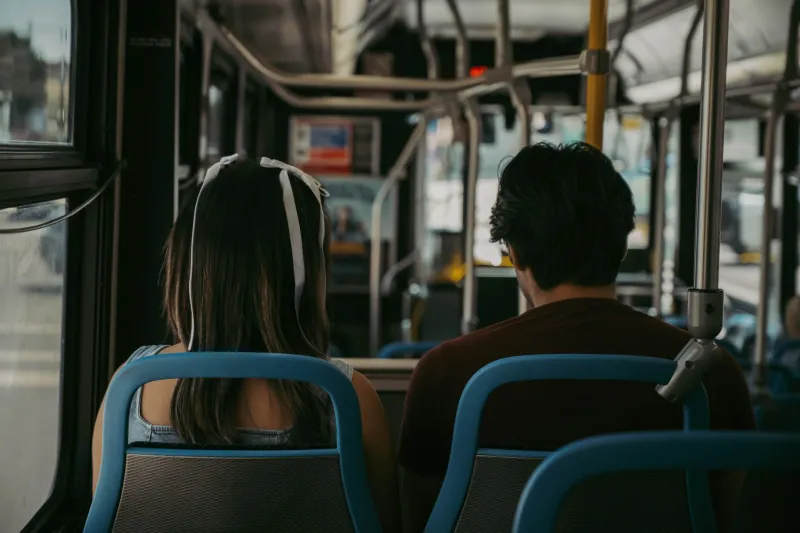
I had a bus to catch.
It was going to take me from a small lake town in Michigan to Chicago, where I'd pick up a connection to Detroit, where I had plans to spend the next four days doing the kind of things you do when you're trying to see a city efficiently. I had a list. I had a rough schedule. I had a reason to leave.
I didn't get on the bus.
Not because anything went wrong. Not because I missed it. I stood at the stop, bag on my shoulder, and just... didn't board. I watched it pull away and felt something that took me a while to identify: relief.
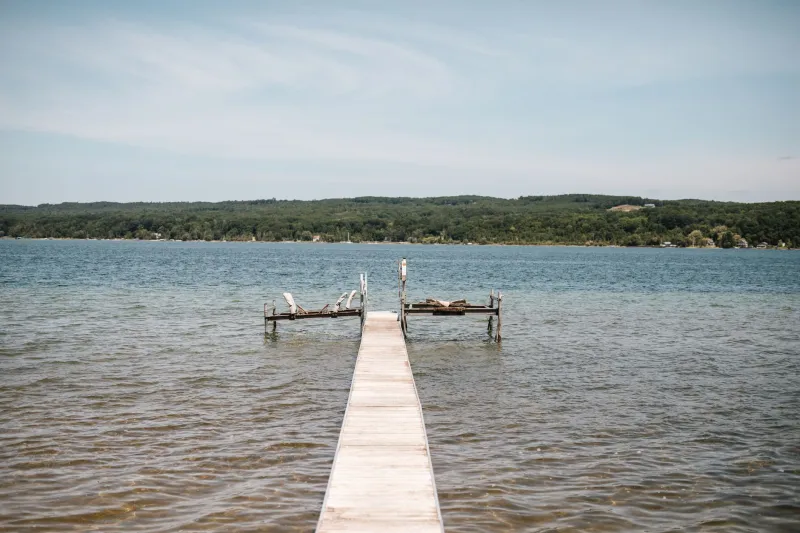
I'd been in that lake town for two days, and I'd barely scratched the surface of it. There was a diner I hadn't gone back to. A conversation with a retired fisherman that felt unfinished. A trail I'd seen from the road that I hadn't walked. I wasn't done.
So I stayed. Four more days, as it turned out.
Those four days changed more about how I travel than any ambitious multi-city itinerary I've ever attempted.
The Guilt Is the First Thing You Have to Deal With
If you've ever voluntarily stayed somewhere longer than planned—especially somewhere that isn't on anyone's bucket list—you know the feeling. It sits somewhere between laziness and indulgence. The internal voice is relentless: You're wasting the trip. You could be somewhere more interesting. Other travelers are covering more ground. You'll regret not seeing ___.
That voice is worth examining, because it reveals something uncomfortable about how we've been conditioned to think about travel. Somewhere along the way, most of us absorbed the idea that a better trip means more destinations. More cities. More countries. More stamps. The implicit assumption is that movement is the point—that covering distance is what travel is.
But that math doesn't actually hold up when you look at what people remember from their trips.
Ask someone to tell you about a meaningful travel experience and they rarely describe a highlight reel of six cities in ten days. They describe a moment. A place they kept returning to. A person they talked to more than once. Something they understood about a place that took time to see.
Time. That's the variable we keep sacrificing.
What a Place Looks Like When You Stay Long Enough
Here's what happens in the first day or two somewhere new: the place is performing for you, and you're performing for it. You're a tourist. You're doing tourist things. You're seeing what tourists see because that's what's visible from the surface.
Stay a few more days and the performance starts to drop. The place relaxes. You start going to the same coffee shop twice. The person behind the counter learns your order. You notice things—rhythms, routines, the way the light changes at different times of day, which streets are busy in the morning versus the evening, what the locals are actually talking about.
You stop being a visitor passing through and start being someone who is, temporarily, from there.
Diana, a nurse from Minneapolis, spent three weeks in a mid-sized city in Wisconsin that she'd originally planned to pass through in a single day. She'd stopped because of car trouble. By the time her car was fixed, she'd found a yoga studio she liked, started eating lunch at a Vietnamese restaurant where the owner was teaching her basic phrases, and gotten genuinely invested in a local story she'd heard about a neighborhood being rezoned.
"I kept thinking I should leave," she says. "But every day something happened that made me want to stay one more day. And then one more. By the end I understood that place in a way I've never understood anywhere I've only visited briefly."
She still thinks about that Vietnamese restaurant. She's gone back twice.
The Unglamorous Places Are Where This Works Best
There's something worth saying about the specific kinds of places where slow travel pays the biggest dividends: often, they're not the places you'd put on a postcard.
A small Midwestern city with a struggling downtown. A beach town in the off-season when the tourists have left and the actual community is visible. A suburban neighborhood in a major city that nobody's written a travel guide about.
These places don't lead with their highlights, because their highlights aren't photogenic in the conventional sense. What they have instead is texture. History. The particular personality of a community that's been doing its thing without an audience.
When you stay long enough, that texture becomes visible. And it's often more interesting than the curated version of a more famous destination.
Tyler, a graphic designer from Philadelphia, spent nine days in a rust-belt city in upstate New York that he'd initially planned to visit for one afternoon. He'd gone to photograph some industrial architecture and ended up talking to a muralist who introduced him to a community garden project that introduced him to a food history he'd never encountered anywhere.
"I've been to Rome," he says, without irony. "That nine days in upstate New York taught me more about America and myself than Rome did. Because I was actually in it."
How to Practice Staying
If you're someone who defaults to ambitious multi-stop itineraries, staying put feels uncomfortable at first. Here are a few things that help:
Book accommodation with flexibility. Avoid non-refundable reservations for the middle of a trip. Give yourself the option to extend without financial penalty.
Set a soft agenda, not a hard one. Instead of booking the next destination before you've arrived at the current one, give yourself a check-in window—maybe day three—where you honestly assess whether you're done.
Ask yourself what you haven't done yet. Not on a list, but genuinely: is there something here that still has your attention? Something unfinished? A question the place hasn't answered yet?
Let yourself be a regular. Go back to the same place twice. Order the same thing, or ask what else they'd recommend. Regularity signals to a place—and to yourself—that you're actually there.
The Bus I Didn't Take
I never made it to Chicago on that trip. I never made it to Detroit. I spent six days in a lake town in Michigan that most people drive through without stopping, and I came home with more than I'd expected to find anywhere.
I know what I missed. I don't know what I would have missed if I'd gotten on that bus.
That's the whole argument, really. Some trips are measured in distance. The ones that change you tend to be measured in depth.
Stay longer than you think you should. See what's underneath.