Why the Snow Globe Is Killing Your Memory of the Trip
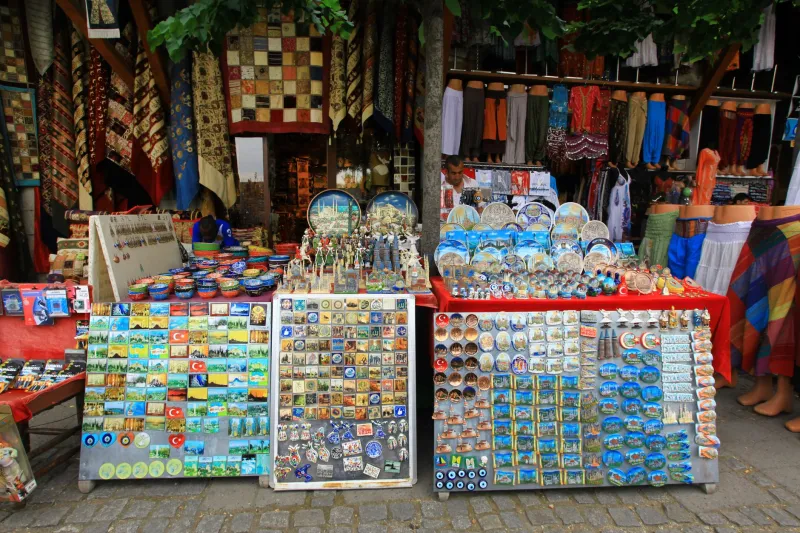
Somewhere in a drawer, or maybe on a shelf you stopped really seeing about six months after you got home, there's an object. A painted ceramic tile from Lisbon. A woven bracelet from a market in Oaxaca. A miniature Statue of Liberty that you bought in an airport gift shop because you panicked and needed something to show for the trip.
And here's the uncomfortable truth: you probably remember buying it more clearly than you remember why you wanted to go in the first place.
The Purchase Becomes the Experience
There's a concept in cognitive psychology called offloading — the idea that when we trust an external object or tool to hold information for us, our brain quietly stops bothering to encode it internally. We do this with our phones all the time. Why remember a phone number when your contacts app has it? Why remember the directions when Google Maps will just recalculate?
Souvenirs work the same way, just with emotional memory instead of factual data.
The moment you buy the thing — the handmade pottery, the silk scarf, the novelty keychain — some part of your brain files the experience under stored. Done. Preserved. And then it moves on. The object becomes a placeholder for the feeling, and the feeling itself starts to fade faster than it would have if you'd never bought anything at all.
This isn't theory. Researchers studying autobiographical memory have found that people who rely heavily on external mementos to "hold" their experiences often report hazier, less emotionally textured recollections of those events over time. Meanwhile, travelers who return home empty-handed — or close to it — frequently describe their memories as sharper, more sensory, more there even years later.
The souvenir promised to protect the memory. Instead, it became a substitute for it.
The Ritual of the Gift Shop
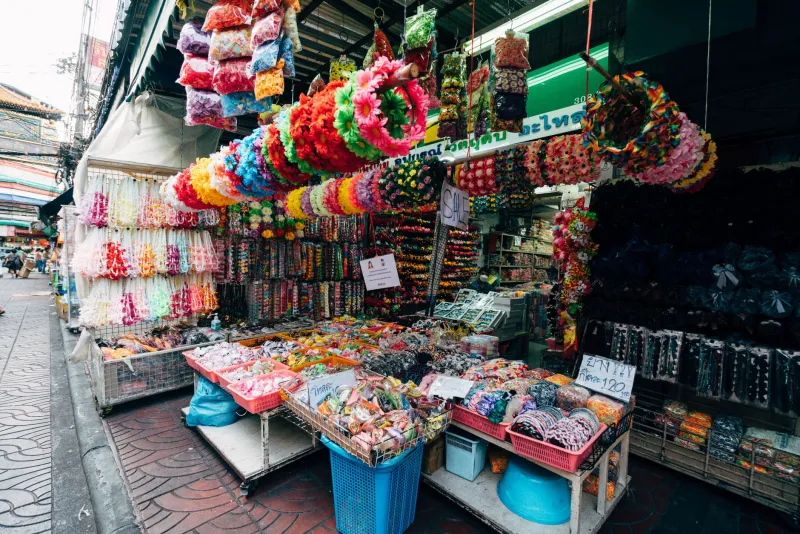
Let's be honest about what actually happens in most souvenir transactions. You're tired. The trip is ending, or you're in a stretch of afternoon where you don't quite know what to do with yourself. You wander into a shop because wandering into shops is what you do when you're in a new place. Something catches your eye — not because it's meaningful, but because it's there and it's priced under twenty dollars and it vaguely represents the place you're standing in.
You buy it. You feel a small, satisfying click of completion.
And then, critically, you stop paying attention to where you are. Because you've already, in some low-level neurological sense, left.
This is the paradox at the center of souvenir culture: the act of acquiring a physical reminder of a place can pull you out of the present-tense experience of that place. You're no longer in the moment. You're already managing the artifact of it.
What Travelers Who Buy Nothing Actually Do Instead
Talk to people who travel light — not just in luggage, but in acquisitions — and you'll notice a pattern in how they describe their trips. They tend to talk in textures and temperatures. The particular weight of the air on a certain evening. The sound a screen door made in a rented cottage in Vermont. The way a stranger laughed at something they said in broken Spanish.
These aren't things you can buy. They're also not things your brain will outsource to a shelf.
When there's no object to carry the memory, you carry it. And the carrying changes how it's stored. It becomes embodied — part of your sensory catalog, not just a fact you know about a place but something you actually felt.
That's a fundamentally different kind of remembering. And it tends to last.
A More Honest Approach to Bringing Things Home
None of this means you should never buy anything. That would be its own kind of rigid, and rigidity is almost always the enemy of good travel.
But it does suggest a different question to ask yourself when you're standing in front of something in a market or a shop.
Instead of Will this help me remember? — try asking Do I already remember this?
If the answer is yes — if you can already feel the memory forming, if the moment has already landed somewhere real inside you — then the object is probably redundant. Your brain has it. You don't need the backup.
If the answer is no, that's worth paying attention to, too. Maybe the experience hasn't been as meaningful as you hoped. Maybe you've been moving too fast, or performing the trip instead of living it. A souvenir can't fix that. Only slowing down can.
The purchases that actually do carry meaning tend to be the ones you didn't plan on. The used paperback you bought from a street vendor because you'd finished your own book and it turned out to be the best thing you read that year. The piece of pottery you bought directly from the woman who made it, after a twenty-minute conversation in mixed languages that left you both laughing. The thing that came with a story already attached — not a story about the place in the abstract, but about you in the place, on that specific afternoon.
That kind of object isn't a substitute for memory. It's a thread back into one.
Coming Home With Less
There's a particular freedom in returning from a trip with an almost-empty bag. Not the freedom of minimalism for its own sake — that can become its own performance — but the freedom of having decided, deliberately, that what you needed from the trip wasn't a thing.
You went further. You felt more. And what you brought back lives somewhere that a snow globe can't hold: in the specific, irreplaceable way you now understand something about the world, or yourself, that you didn't understand before.
That's not nothing. That's everything.
And it won't end up in a drawer.