The Thing You Didn't Bring Home Is the One You Can't Stop Thinking About
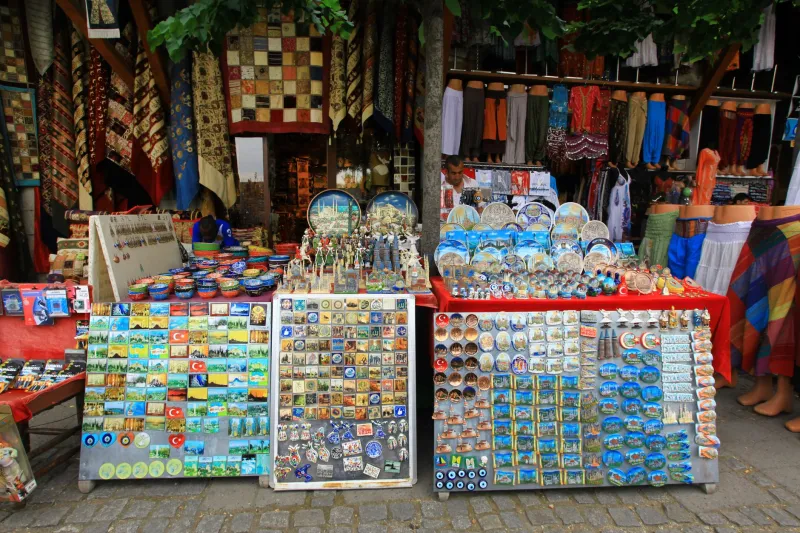
Somewhere in a market stall in Santa Fe — or maybe it was a side street in New Orleans, or a craft fair in Vermont — there's a version of you that picked up a small, hand-painted thing, turned it over, checked the price, and set it back down. You told yourself it was too fragile to pack. Too expensive. Too much. You had enough stuff already.
That was three years ago. You still think about it.
Not every day. But enough. It surfaces when you're unpacking from another trip, or when you catch yourself scrolling through old travel photos looking for — what, exactly? Evidence that you were really there? Proof that something happened?
Here's the uncomfortable truth that nobody really talks about in travel circles: the things we didn't do on a trip have a longer shelf life in our memories than the things we did. The dish we were too nervous to order. The detour we skipped because it wasn't in the itinerary. The invitation from a stranger that we politely declined because it seemed weird, or risky, or just too much effort after a long day.
Those absences? They stick around. And they're worth paying attention to.
Why Regret Travels So Well
There's actually a name for the psychological pattern at work here. Researchers who study decision-making have long noted that people tend to regret inactions more than actions over time — especially when those inactions involved a genuine opportunity that passed. In the short term, we might feel relieved that we didn't take a risk. Long-term? The "what if" grows.
Travel is basically a perfect environment for this dynamic to thrive. You're dropped into a completely unfamiliar context, flooded with options, operating on limited time, and making dozens of micro-decisions every day. Some you'll barely remember. Others — the ones tied to a real moment of hesitation, a genuine pull in one direction that you talked yourself out of — those are the ones that calcify into something more permanent.
It's not guilt, exactly. It's more like an open loop that your brain never quite gets to close.
The Market Stall Problem
Let's talk about the souvenir thing specifically, because it's the most tangible version of this phenomenon.
Most of us have been trained to be skeptical buyers at tourist markets. We've read the articles about not getting ripped off, about how the "handmade" goods are sometimes mass-produced, about how you'll just have to pack it and probably break it anyway. And honestly? That skepticism is sometimes warranted.
But it can also become a reflex that fires even when it shouldn't. You're standing in front of something genuinely beautiful — something made by an actual person in that actual place — and instead of letting yourself feel the pull of it, you run the cost-benefit analysis. You talk yourself out of it. You move on.
The thing is, you weren't just considering whether to buy an object. You were considering whether to acknowledge that this moment mattered. Whether to let yourself be moved enough to act on it.
When we pass on the small, meaningful thing in favor of practicality, we sometimes leave behind a little piece of the experience itself. And our memories, it turns out, notice the gap.
The Declined Invitation Hits Differently
Objects are one thing. But the deepest travel regrets — the ones that show up uninvited at 11pm on a Tuesday — tend to involve people.
The group of locals at the next table who gestured for you to join them, and you smiled and shook your head. The guesthouse owner who offered to take you to a place that wasn't in any guidebook, and you said maybe tomorrow (there was no tomorrow). The solo traveler you had a two-hour conversation with on a train, who suggested meeting up the next day, and you never texted.
These aren't tragedies. Nobody's life was ruined. But they linger because they represent something real: a version of the trip that almost happened. A connection that almost formed. A story that almost became yours.
And unlike the ceramic bowl you left on the shelf, you can't go back and buy this one later.
What Your Absences Are Actually Telling You
Here's where it gets interesting — and maybe a little useful.
If you sit with your travel regrets instead of just feeling vaguely bad about them, they tend to point pretty clearly toward what you actually value from travel. Not what you think you value, or what looks good in a caption, but what genuinely matters to you when you're out in the world.
The person who can't stop thinking about the meal they didn't order? They probably care deeply about culinary experience, about being brave enough to try the unfamiliar. The one haunted by the invitation they declined? Connection is likely their core travel currency — more than sights, more than logistics.
Your regrets are, in a weird way, a pretty honest map of your values.
Which means they're also instructions. Not for beating yourself up over the past, but for making different calls going forward. For recognizing the moment of hesitation when it comes — and asking, is this caution or is this fear? Because those two things feel identical in the moment and produce very different memories afterward.
The Souvenir Worth Keeping
There's a version of this essay that ends with a tidy call to action: say yes more, buy the thing, accept the invitation, order the dish you can't pronounce. And honestly, that's not wrong advice.
But the more honest ending is this: your travel regrets are data. They're the receipts from every moment you were genuinely present enough to feel a pull toward something, and either followed it or didn't. The fact that they haunt you means you were actually paying attention. That you were there, in the real sense of the word.
The person who comes home with zero regrets either took every single opportunity that presented itself — which is rare and exhausting — or they weren't fully engaged with what was in front of them. The absences sting because the presence was real.
So yeah. You should've bought the bowl. You should've sat down with those strangers. You should've taken the detour.
But also: the fact that you know that now? That's not nothing. That's you figuring out who you are when you travel — and who you want to be next time you go.