What a Rust Belt Town Taught Me About Adventure That Patagonia Never Could
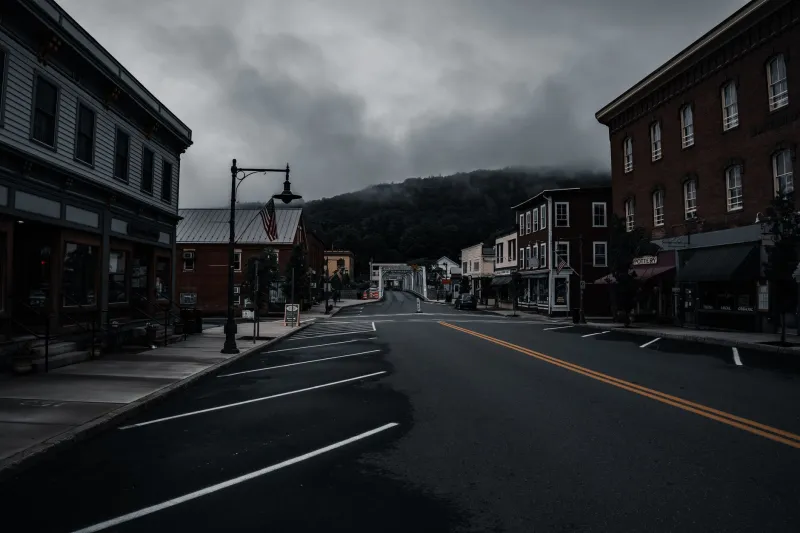
I have a confession that might get my travel blogger card revoked: the trip that changed me most didn't involve a single passport stamp, a turquoise lagoon, or a sunrise hike that made me cry in a photogenic way. It happened in Youngstown, Ohio — a city that, for most people, exists only as a punchline or a cautionary tale about deindustrialization.
I went because a friend dared me to. Not literally, but she said something that lodged in my brain like a splinter: "You've been everywhere that looks good on a map. Have you ever been anywhere real?"
That stung. And she wasn't wrong.
The Tyranny of the Bucket List
Travel culture in the US has a serious glamour problem. We've built an entire ecosystem around destinations that photograph well — the slot canyons of Utah, the neon chaos of Tokyo, the vineyard-draped hills of Tuscany. There's nothing wrong with any of those places. I've loved some of them.
But the bucket list mentality quietly teaches us that adventure lives only in superlatives. The highest peak. The most remote island. The oldest ruins. We're chasing a ranked list of experiences like we're completing achievements in a video game, and somewhere in that pursuit, we stop actually paying attention.
When everything is extraordinary, your brain stops processing the world as something genuinely surprising. It starts pattern-matching. Oh, another waterfall. Oh, another medieval square. You're physically present but experientially numb.
Boring places — and I use that word with enormous affection — don't let you do that.
Youngstown Didn't Perform for Me
Here's what Youngstown gave me that no curated destination ever has: indifference. The city was not waiting for my arrival. It was not trying to charm me or sell me anything. The vacant lots and the repurposed steel mills and the corner bars full of regulars who'd known each other for thirty years — none of it cared whether I had a good time.
And that indifference was the most liberating travel experience I'd had in years.
Without a highlight reel to chase, I actually slowed down. I ended up spending three hours in a diner talking to a retired steelworker named Gerald who had opinions about municipal pension reform that were more nuanced and more interesting than anything I'd read in a political magazine. I wandered into a tiny gallery run by a collective of artists who had deliberately chosen to stay in a struggling city because, as one of them told me, "Someone has to witness this place. Someone has to make something here."
I walked streets where houses had been demolished and nature had simply moved back in — sumac trees splitting old sidewalks, wildflowers growing through chain-link fences. It was strange and melancholy and quietly beautiful in a way that no travel photographer was going to put on a mood board.
The Authenticity You Can't Stage
Here's the uncomfortable truth about "authentic travel experiences": the more desirable a destination becomes, the harder authenticity is to find there. Tourism reshapes places in its own image. Restaurants adjust their menus. Neighborhoods gentrify toward the aesthetic preferences of visitors. Local culture becomes a product.
Small, overlooked towns haven't been through that transformation. The people there aren't performing a version of themselves for outsiders. The stories you encounter haven't been pre-approved for palatability.
I've had this experience in places across the country — a dying fishing town on the Gulf Coast of Mississippi, a former coal community in eastern Kentucky, a small agricultural city in California's Central Valley that gets driven through but never visited. Each time, the lack of tourist infrastructure forced me into a more honest kind of engagement. I had to actually talk to people. I had to figure out where the locals ate because there was no Yelp filter for "most Instagrammed brunch spot."
That friction — the mild inconvenience of a place not designed for visitors — is where real travel begins.
Redefining What "Going Further" Actually Means
Wander With Kami is built on the idea of going further and feeling more. For a long time, I interpreted "further" in purely geographic terms. Further from home. Further into wilderness. Further outside my comfort zone in ways that could be measured in altitude or miles from the nearest airport.
But Youngstown reframed that for me. Sometimes going further means going deeper into a place that everyone else dismisses. It means resisting the pull toward what's been pre-validated as worth your time and instead trusting that meaning can exist anywhere humans are living out their complicated, unglamorous lives.
The adventure in an overlooked place is quieter. It doesn't make for a great travel reel. But it has a way of sitting with you longer — the kind of experience that surfaces in your memory months later while you're doing something completely mundane, and you think, I'm glad I went there. I'm glad I paid attention.
A Challenge for Your Next Trip
I'm not suggesting you cancel your trip to Iceland. Go. It's incredible. But before you book your next adventure, try this: look at a map and find the place no one in your social circle has ever mentioned wanting to visit. The overlooked city. The unremarkable small town. The place with a Wikipedia page that's mostly about its declining population.
Go there with no agenda beyond curiosity. Eat where the locals eat. Talk to someone who has no reason to make a good impression on you. Let the place be exactly as unglamorous as it is.
You might come back without a single shareable photo. You might also come back changed in a way that a summit selfie never managed.
That's the reverse bucket list. And honestly? It's the most adventurous thing I've done in years.