Stop Planning So Hard: The Unexpected Freedom of Wandering Without a Map
The Itinerary Is Lying to You
You've been there. You spend three weeks color-coding a Google Doc, cross-referencing Tripadvisor reviews, and stacking your days so tightly that lunch has a fifteen-minute buffer. You land in Lisbon or Oaxaca or Kyoto, and for the first few days, everything goes according to plan. And somehow, it all feels a little... flat.
That's not a bug. That's what over-optimization does to experience. When every moment is accounted for, there's no room for surprise—and surprise, it turns out, is where travel actually lives.
Wandering without a plan isn't carelessness. It's a conscious choice to trade certainty for possibility. And once you try it, going back to the rigid itinerary feels a little like watching a movie you've already seen.
What Psychologists Say About Uncertainty (and Why It's Good for You)
Here's the thing: our brains are wired to find patterns and predict outcomes. It's efficient, sure, but it's also the enemy of wonder. When we already know what's coming—which museum at 10 a.m., which restaurant at 7 p.m.—our minds go into autopilot. We're present in body but somewhere else entirely in spirit.
Psychologists who study awe and novelty have found that unexpected experiences light up the brain differently than anticipated ones. Surprise triggers dopamine in a way that planned rewards simply don't. In other words, stumbling onto a tiny jazz club in New Orleans' Tremé neighborhood at 11 p.m. because you took a wrong turn hits differently than showing up to a jazz bar you booked two months ago on Yelp.
Intentional wandering essentially hacks this system. You're not being reckless—you're creating the conditions for genuine discovery.
What "Wandering on Purpose" Actually Looks Like
Let's be clear: this isn't about showing up to a foreign city with zero preparation and hoping for the best. That's a fast track to stress and missed opportunities. Intentional wandering is more nuanced than that.
It means knowing your general bearings—understanding which neighborhoods feel safe, having a rough sense of the city's geography—but leaving the actual doing completely open. You might know you want to spend a day in the old quarter of Cartagena, Colombia. But you don't book a walking tour. You don't look up the top-rated cafés. You just go.
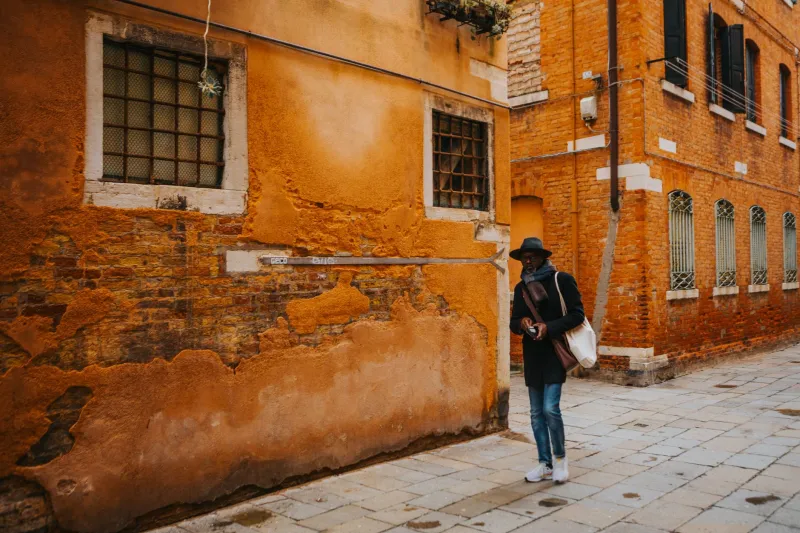
You pick a direction. You follow what interests you. A hand-painted sign. A smell. The sound of music drifting from an open doorway. A street that looks like it might lead somewhere interesting.
This is how you find the grandmother selling tamales from a cart in the alley that no food blogger has ever written about. This is how you end up spending two hours talking to a retired schoolteacher in a plaza who tells you stories about the city that aren't in any guidebook.
The Connection Problem with Guided Tours
Guided tours aren't bad. They're often genuinely great for historical context, for accessibility, for hitting major landmarks efficiently. But they do something subtle and a little unfortunate: they put glass between you and the place you're visiting.
When you're in a group of twenty people following a flag on a stick, locals see a tour group. They step aside. They wait for you to pass. The dynamic is fundamentally transactional—you're a visitor consuming a curated experience, not a person moving through someone else's everyday world.
Wander alone, at your own pace, and that dynamic shifts. You become approachable. You have to interact, because you don't always know where you're going. You ask for directions and end up getting a recommendation for a lunch spot that becomes the highlight of your whole trip. You sit down somewhere and a local sits next to you and conversation just happens.
That's the real currency of travel—human connection—and it's remarkably hard to manufacture on a schedule.
Letting Go of Travel FOMO
American travel culture has a complicated relationship with FOMO. We feel pressure to see the big things, hit the famous spots, collect the experiences that look good on Instagram and sound impressive at dinner parties. We come home and people ask, "Did you see the Colosseum? Did you do the gondola?" And if the answer is no, there's a faint sense that we did it wrong.
Intentional wandering asks you to make peace with missing things. Not every famous thing, obviously—but the relentless pursuit of the checklist. It asks you to value depth over breadth, presence over productivity.
Some of the most transformative travel moments are deeply unsexy. A long afternoon in a park watching pigeons and kids playing soccer. Getting rained on and ducking into a bookshop you'd never have entered otherwise. Eating at the same hole-in-the-wall three days in a row because it made you feel at home.
Those moments don't make great Instagram captions. But they're the ones you'll still be thinking about ten years from now.
How to Start: A Practical Nudge
If the idea of going fully planless sounds terrifying, start small. On your next trip—whether it's a weekend in Nashville or a week in Costa Rica—designate one full day as a wander day. No bookings. No agenda. Wake up, see how you feel, and go from there.
Give yourself one loose anchor: a neighborhood you're curious about, a general direction, a market you heard might be worth poking around. Then let the day take over.
Bring comfortable shoes, some local cash, a fully charged phone (for safety, not scrolling), and a willingness to feel slightly uncomfortable. That discomfort? That's the sensation of being genuinely alive in a new place.
Come Back Different
The travelers who come back truly changed aren't usually the ones who hit every landmark. They're the ones who left space in their days for something unexpected to happen—and then let it.
Wandering without a plan isn't about being unprepared. It's about being open. It's choosing to trust that the world has something to show you that you didn't know to look for. And more often than not, it does.
So on your next trip, close the spreadsheet. Put down the color-coded itinerary. Step outside and just... see what's there.
You might be surprised what finds you.