Empty Hands, Full Heart: What You Actually Bring Home From Every Trip
Every time I've come back from a trip, my mom asks the same thing: Did you bring me anything?
For years, I'd arrive with a little something — a jar of local honey, a handwoven keychain, a magnet for the fridge she's been collecting since 1987. And honestly? Most of those things ended up in a drawer within a month. The honey got used. The keychain lost a key. The magnet is probably still up there, sandwiched between a pizza coupon and a school photo from 2003.
But the thing I brought back from that same trip — the one nobody asked about — was a completely rearranged sense of what a meal is supposed to feel like. I'd spent two weeks in Portugal eating slowly, eating outside, eating with strangers who became friends by the second glass of wine. I came home and couldn't rush through dinner anymore. That shift? Still with me. Still real. Never cost me a single euro.
We've built a strange guilt economy around travel souvenirs. You go somewhere, and you feel this low-grade pressure to prove it — to yourself, to the people back home, to your own Instagram grid. So you buy the thing. The tote bag. The artisan salt. The overpriced print you'll never frame. And then you lug it all home and wonder why the trip already feels like it's slipping away.
Here's what nobody tells you: the stuff you can't buy is already in your bag.
The Souvenir Industrial Complex
Let's be honest about what most travel shopping actually is. It's anxiety management. It's the physical act of trying to hold onto something ephemeral — a feeling, a moment, a version of yourself that existed only in that place. You buy the ceramic bowl because you want to keep the afternoon in that Oaxacan market. You grab the scarf because you want to remember the medina, the smell of the spice stalls, the way the light hit at 4pm.
There's nothing wrong with that impulse. It's deeply human. But the bowl and the scarf are just proxies — and they're imperfect ones. They can trigger a memory, sure. But they can't hold the memory itself. That lives somewhere else entirely.
The souvenir industry — and it is an industry, a massive one — has convinced us that the proof of a trip is tangible. That if you can't show it, it didn't quite count. That empty hands mean a wasted opportunity. That's worth pushing back on, hard.
What You Actually Carry Home
Think about the trips that genuinely changed you. Not the ones with the best photos or the most stamps in your passport — the ones that actually left a mark. What did you bring back from those?
Maybe it was a skill. You learned to navigate a subway system in a language you don't speak. You figured out how to haggle, or how to ask for help without embarrassment, or how to sit with discomfort when everything around you felt unfamiliar. Those are real competencies. They transfer. They make you measurably better at being a person in the world.
Maybe it was a perspective shift — the kind that sneaks up on you. You spent a week somewhere with less, and you came home genuinely unsettled by your own closet. Or you watched how a different culture handles conflict, or grief, or celebration, and something quietly recalibrated in you. You can't put that on a shelf, but it's shaping every decision you make.
Maybe it was a scar, literal or otherwise. A bad sunburn. A sprained ankle on a trail you had no business being on. A heartbreak that happened to unfold in a beautiful place. Discomfort has a way of making things stick. The trips that cost you something — physically, emotionally, logistically — tend to be the ones you never stop thinking about.
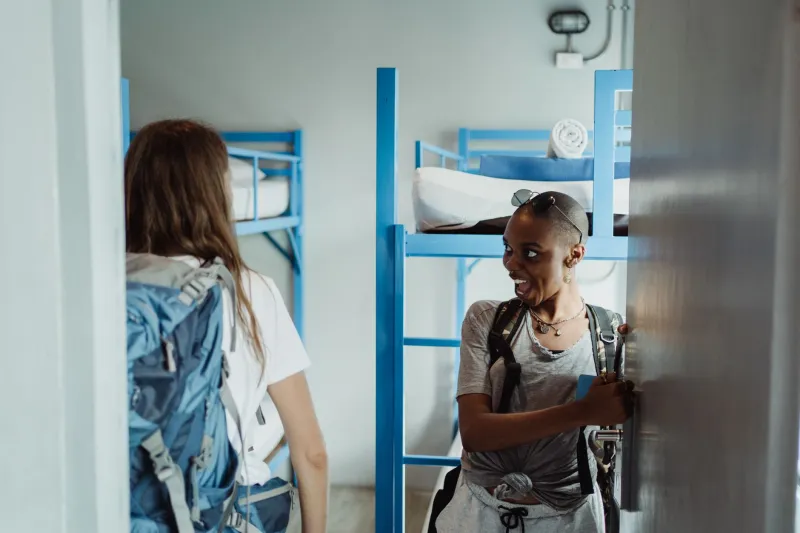
And maybe, if you're lucky, it was a person. The woman you met at the hostel who recommended the place that became your favorite place. The cab driver who told you something true about his city that no guidebook ever would. The travel companion you didn't expect to still be texting three years later. Relationships forged on the road have this weird durability to them. Something about being equally lost together makes the bond stick.
Traveling Light Isn't Deprivation — It's Trust
There's a version of travel minimalism that's about practicality — carry-on only, no checked bags, move faster. That's fine. But there's a deeper version that's about trust. Trust that the trip will give you what you need, even if you can't hold it in your hands.
When you stop trying to acquire your way through a destination, something opens up. You browse the market because you're genuinely curious, not because you're hunting. You talk to the vendor instead of just transacting with them. You notice things — the weird detail on a building, the song playing in the café, the way the light changes at a certain hour — because you're not busy calculating whether something will fit in your luggage.
This is a real shift, and it takes practice. We're not wired for it. American consumer culture in particular has a way of making acquisition feel like participation. Like if you didn't buy anything, you weren't really there. Unlearning that is part of what travel is for.
Give Yourself Permission to Come Back Empty-Handed
You're allowed to come home with nothing to show for it. No haul. No gifts for everyone on the list. No proof.
You're allowed to say I didn't buy anything and let that be the whole answer. Because the real answer is longer and stranger and more interesting than any object you could have carried through customs. The real answer involves the conversation you had at a bar in Nashville before your flight, or the morning you woke up early by accident and watched a city come alive, or the moment you realized you'd been holding your breath for six months and somewhere over the Atlantic you finally let it out.
That's what you brought home. That's the whole point.
Your mom might still want a magnet. Maybe grab one anyway — the fridge collects them, and some traditions are worth keeping. But don't confuse the magnet for the memory. Don't confuse the souvenir for the trip.
The best things you haul back from every journey are already unpacked. They're in the way you move through the world now, just slightly differently than before. And that's more than enough.